Monday, February 2, 2015

Shop Drainage Complete

During heavy rain events (>1 inch), the GCM Building used to flood. The equipment bay, shop area, employee lounge and offices would all flood. The maintenance building is located at the bottom of a ravine that receives high amounts of rain from the streets from above. When the water would funnel off the roof it became trapped behind the building in a ditch with nowhere for it to go except into the shop. 

The back of the building, where much of our storage space is located, was also sloped in a way that much of the water was coming back towards the shop instead of deflecting the water towards storm water basins. We created a ditch network with drainage to move all of the water away from the building. We also sloped the back of the shop, cleaned out all of the trash and sealed it with concrete screenings. We are now able to work more efficiently, maintain a dry work environment and be able to get to the golf course.

"If you can't maintain the back of the house, you can't maintain the front of the house!"

Jared's office after a rain storm event.
Over 1 inch of water in the employee break room
Water from the roof and streets above would get trapped in the ditch behind the shop with nowhere to go but inside it.

Drainage pipe and basins were installed every 20 feet.
Surge gravel was installed so we can keep the area free from debris.
Back of maintenance building before.
Back of maintenance building after.
The landscape in front of the building also received a makeover.
The men showing me how they poured/mixed concrete in their native country.
  
The results of our staff's hard work.

Friday, January 30, 2015

Drainage at #9 Complete

The area on the right side of #9 golf hole near the clubhouse has been drained. Over 400 linear feet of drain tile was installed in the 2,000 SF area. Almost all of the work work was done by hand due to the area being above field capacity for so many years.

In the past this area was trimmed by hand each week to maintain somewhat of an acceptable appearance. This area should drain more effectively now and be able to be maintained with regular mowing equipment.

This area was not maintainable, unplayable and an eye soar for many years.
Matt and Arnold begin the only trench to be dug with a machine. The rest was dug by hand.
Colton Jones and Arnold begin filling in the first trench connecting the area to a stormwater basin.
All of the trenches in the wet area were dug by hand. The men did a great job with this physical assignment.
A seepage basin was added in the wettest area connecting drains from area properties and pipes. Now the water is all going to a central location and has an avenue to move off site.
The final project as seen from the clubhouse.

Friday, December 19, 2014

Greens Have Been Painted

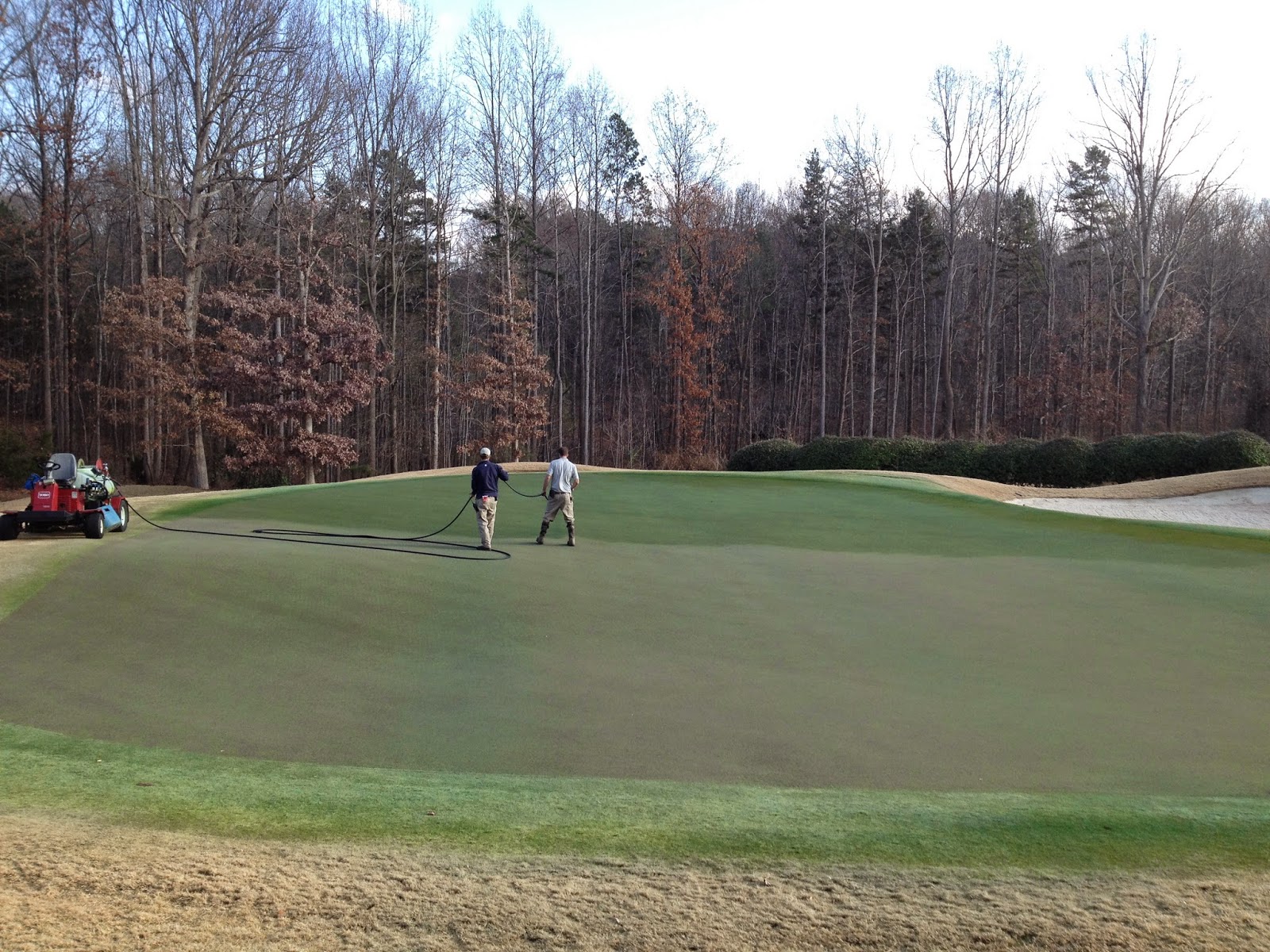
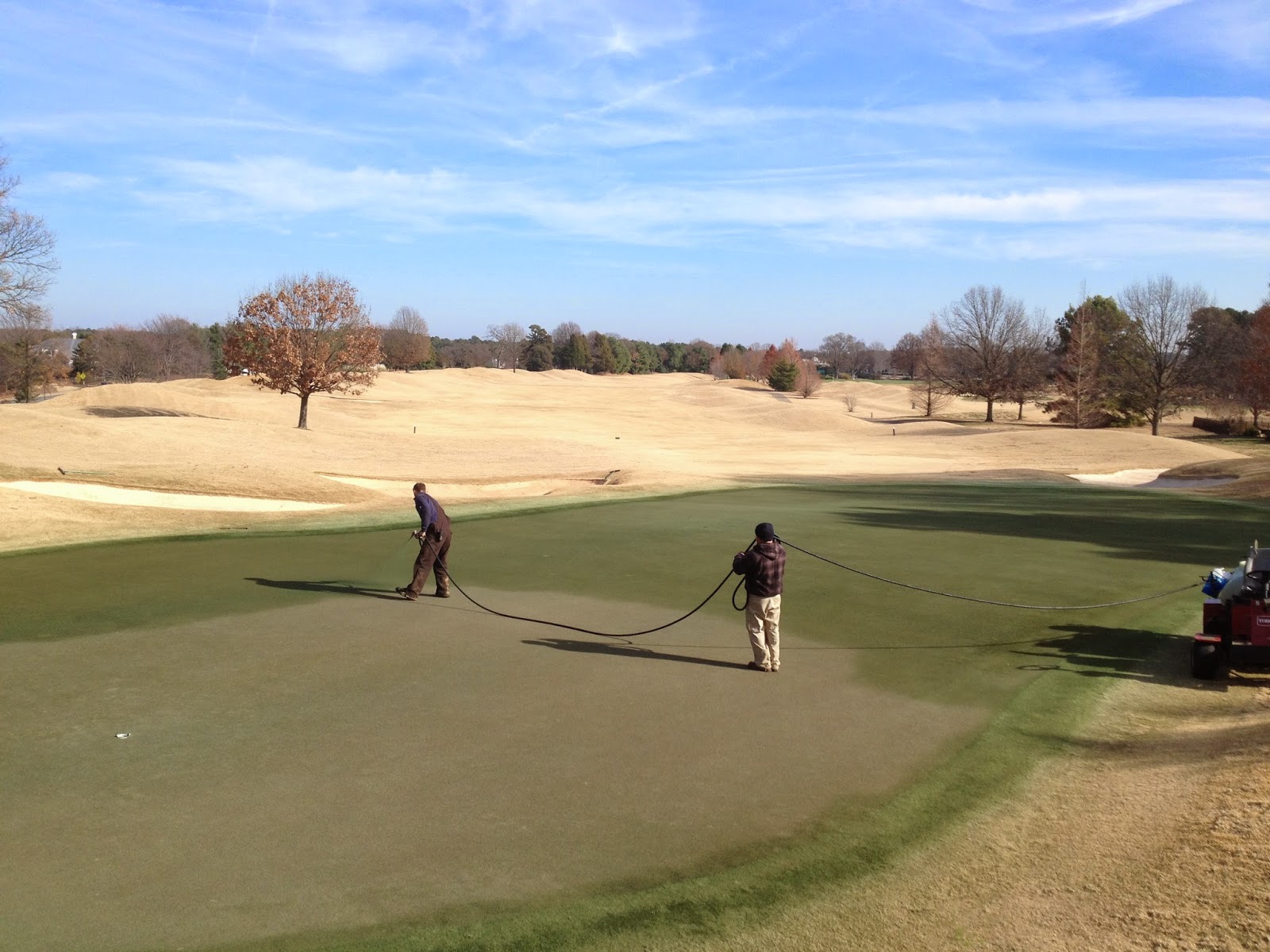
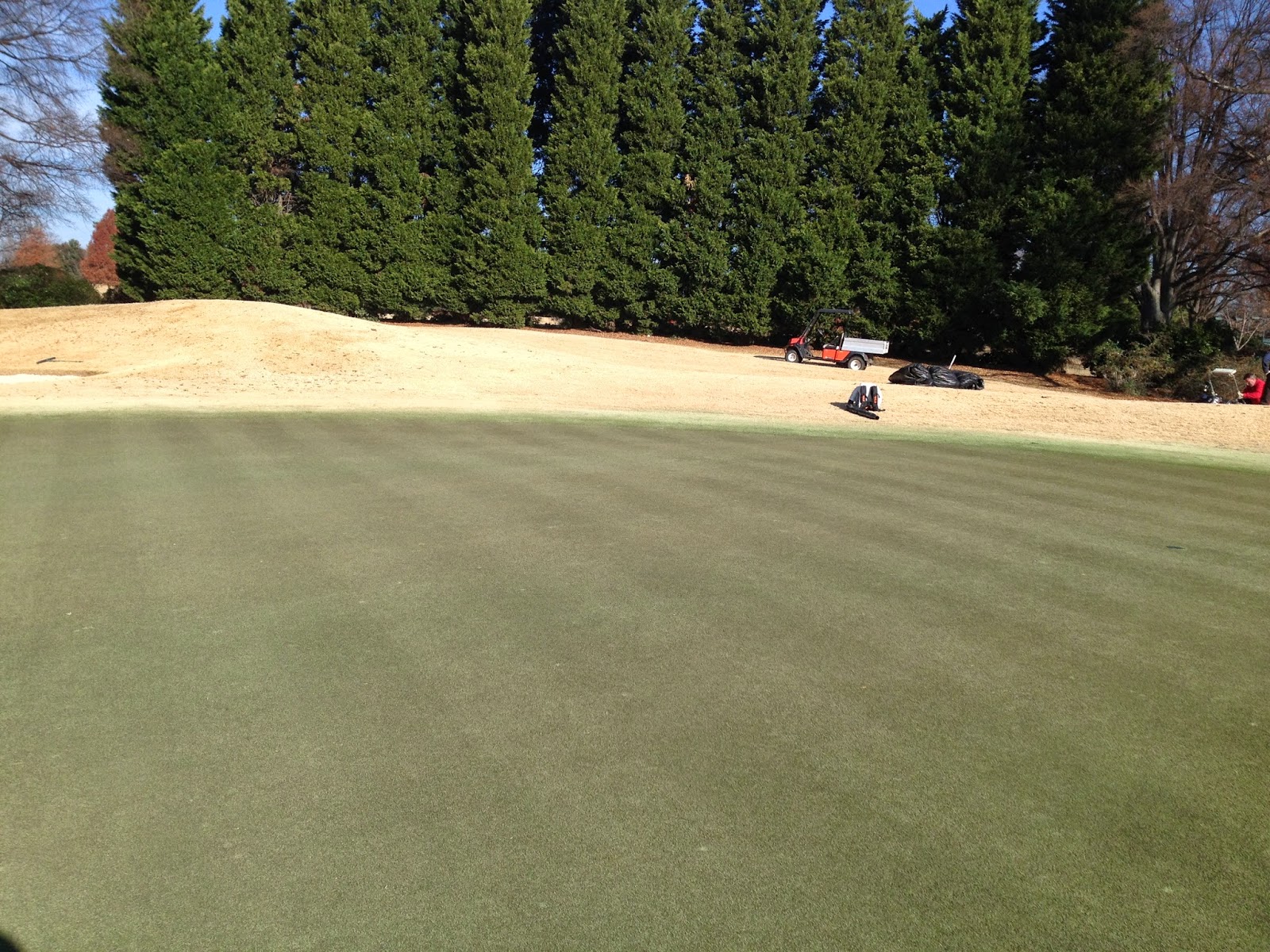
As the greens made their way into dormancy it was time to paint the putting greens. The greens were painted on Monday and Tuesday of this week. The greens now have a bright green appearance that should last between 45 and 60 days. Depending on the color of the greens in January and February another application of paint may be applied.

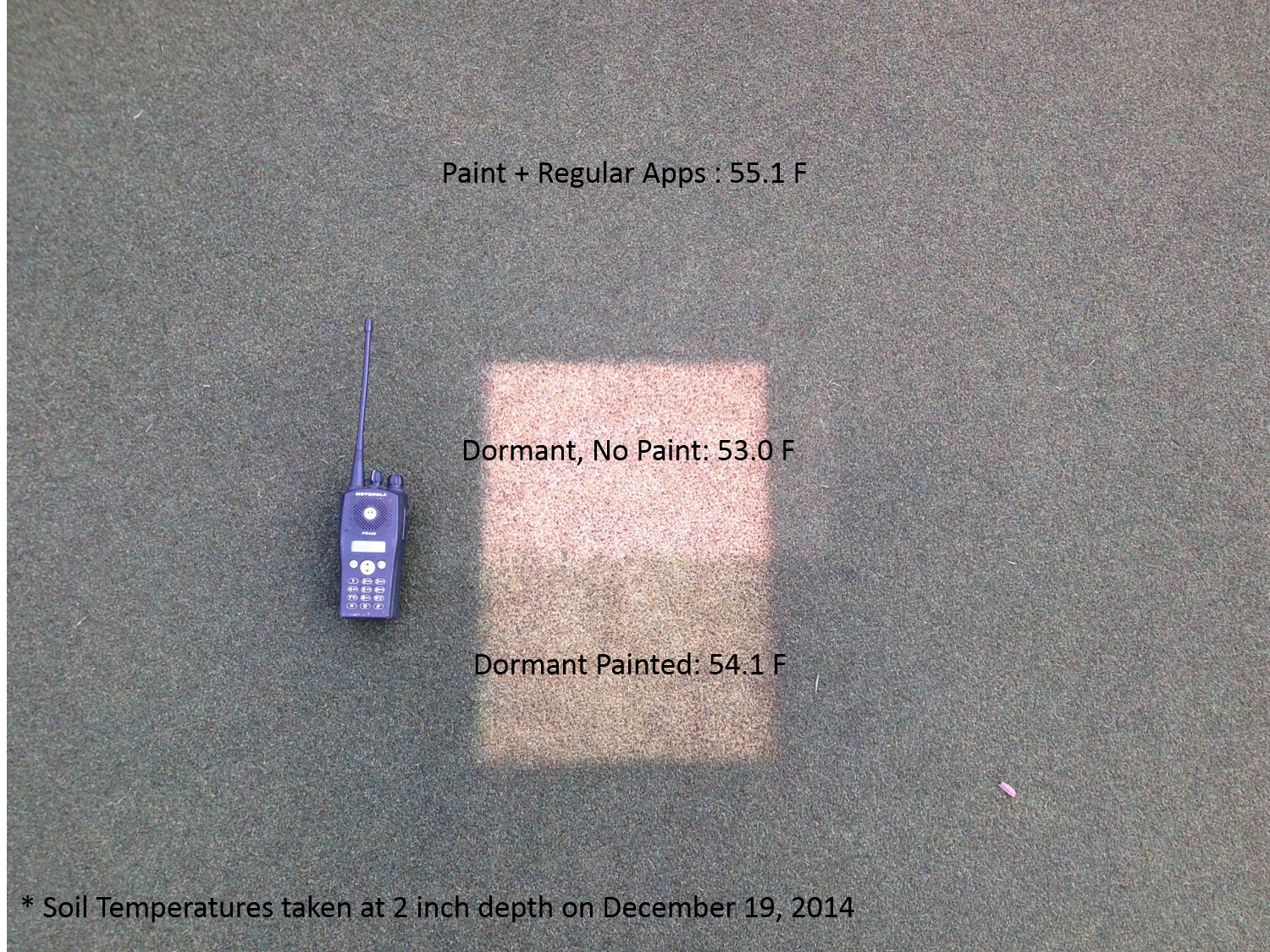
Painting greens is aesthetically pleasing to the golfer and has agronomic benefits as well. It presents a very visible target to aim at and offers variation from the rest of the dormant golf course. Painting greens also aids in keeping the soil and turf insulated. This helps to protect the plant against cold temperatures. Greens that are painted have been found to keep the soil and turf 3-5 degrees warmer than without.
Figure 1. The test plot on #10 green shows how paint can dramatically impact soil temperatures at 2 inches. (Paint + Regular Apps received paint and regular applications of chemicals and fertilizer throughout the year. Dormant + No Paint received none of the regular chemical or fertilizer applications throughout the year. Dormant + Paint received only the paint this week.)
Assistants Nick and Colton painting #15 green.

Colton and Cesar Lopez painting #1

#5 before

#5 after

Friday, October 31, 2014

Please Repair Ball Marks

Repairing ball marks on greens is an important etiquette that preserves green playability and roll through out the day.

As we enter winter time it is increasingly important to repair ball marks on bermudagrass greens. Ball marks left unrepaired will leave a small unsightly mark in the green disrupting the playability and aesthetic beauty of the green.

Properly repairing a ball mark is the best way to ensure all golfers can enjoy their rounds with out disturbances on the green. Below is a United States Golf Association (USGA) video showing how to properly repair a ball mark.

Proper repairing of ball marks is essential to preserving putting green playability (GCSAA).


Thursday, October 9, 2014

2014 Tradition A Success

Last weekend was the 4th Annual Tradition at The Peninsula Club. The event was spared by weather and it ended up being a wonderful tournament and event. The golf course maintenance staff put in AM and PM shifts throughout the week to produce an enjoyable and beautiful golf course. 

The members and their guests were very complimentary of the course and the job the staff was doing. 

The GCM crew puts final touches on #18.

The GCM staff puts the last few mowings on 18 green before the tournament begins.
#18 golf hole ready for Day 1
The par 3 4th 
The 4 hole shootout started on #6 and ended in dramatic fashion on #9.
The GCM staff wants to thank all of the members for their kind words and support throughout the tournament.

Sunday, September 14, 2014

Bunker (In)Consistencies

I have received questions regarding the consistencies of our bunkers. The USGA produced an informative video on the consistency or rather the inconsistencies of bunker hazards. This short video discusses why bunkers are inconsistent and the challenges with maintaining them all to be the same.


Friday, September 12, 2014

GCM Welcomes New Assistant

It is my pleasure to introduce Mr. Colton Jones (Right). He is replacing Drew Hensley, 2nd Assistant, who left our management team to join Quail Hollow earlier this summer. Colton received his Bachelor of Science in Plant and Soil Science and Minor in Business Administration from the University of Tennessee-Martin.


Colton joins us most recently from working at Pinehurst Resort #2 where he experienced historic back to back U.S. Opens and the putting green conversion from bentgrass to ultradwarf bermudagrass. Colton has previously worked at Charlotte Country Club, Callawassie Island in Hilton Head and volunteered at The Players Championship at TPC Sawgrass. He has also interned with the USGA Agronomic Turf Advisory Service under Chris Hartwiger and Patrick O’Brien.


We are happy to have Colton join our team. When you see Colton on the course please welcome him to The Peninsula Club.